


The Shift to Agentic AI and a Modern Database

Jim Walker
Chief Product Officer
Jim Walker
Chief Product Officer
The core objective of Agentic AI is to deliver systems capable of executing functions that are generally associated with human intelligence, such as reasoning and learning. The long-term goal is to make them exhibit human-level cognitive abilities, so agents can adapt to situations without requiring task-specific programming.
As Agentic AI evolves, we need agents that will both think and act. We need a database that supports both real-time operational transactional and ad-hoc analytical workloads. Intelligent transactions can’t wait for a complex analytical query to run in one system and have delayed results sent to another just to gain insight. Agents need to be able to ask ANY questions, not just predetermined queries and views. They can’t rely on relatively slow (and incredibly complex/brittle) data movement. They’ll need a single relational database for both transactions and live analytics, and we’ll need all of this at scale.
Over the years, many have tried to combine OLTP and OLAP into a single database solution. However, all previous attempts encountered the “triangle problem,” where trade-offs among three primary system constraints are required:
Optimization for all three constraints without compromise has proven to be a massive challenge, especially with the added constraint of strong distributed ACID compliance for a relational database.
Some doubt the plausibility of a combined, distributed OLTP/OLAP relational database. It is an intriguing problem that some have attempted to solve. The Regatta team, however, has taken a fundamentally different approach and has rethought the solution from the ground up. Unlike other recent database innovations that look at a database as solely a compute problem, Regatta relies heavily on innovations at the storage layer of the database combined with a wholly new and extremely efficient concurrency control protocol.
This shift in approach is the natural progression of the team’s experience over the last couple of dozen years. We are pioneers of the “Software-Defined” revolution. While at ScaleIO, we proved that intelligent software could replace specialized hardware and turn commodity servers into enterprise-grade storage. At XtremIO, we helped normalize the idea of the “All-Flash Data Center.” We have a fairly large amount of experience designing and building scale-out, efficient distributed storage solutions.
This collective experience in designing efficient, scalable systems provides the foundation for a novel storage-centric design in RegattaDB, which allows it to address the constraints of the traditional “triangle problem”.
RegattaDB allows you to execute complex, ad-hoc analytics on live transactional data. It delivers a distributed SQL database where guaranteed, cross-node, consistent transactions and complex analytical queries can co-exist, all without compromising performance and with extreme efficiency. Further, it incorporates vector database capabilities and is a distributed database that helps you scale easily and guarantee resilience.
This combination of capabilities delivers a database that allows our modern AI agents to not just transact, but to reason using current and complete context. It enables these core Agentic AI functions that were once unthinkable:
The triangle challenge is real, and RegattaDB has addressed its challenges. It is also extremely resource efficient and high performant. It presents a Distributed SQL database without the gabby consensus protocols, so it is much cheaper to run than traditional Distributed SQL solutions, yet you still gain the benefits of consistent transactions at high performance, easy node-based scale, natural resilience and reduced data architecture complexity.
And with single node databases, they generally require you to overprovision server resources to allow for traffic spikes and growth. RegattaDB allows you to use all cluster-wide free resources to accommodate these concerns, so there is no need to overprovision an individual node, delivering on average a 3-4x better footprint efficiency.
This single OLAP/OLTP database also helps eliminate costly and brittle ETL and add-on services that increase complexity and latency in your data architecture. It eliminates the tangled mess of data movement and reduces the time it takes for your team to gain insight from business data. It’ll save time troubleshooting these layers and reduce operational costs. Finally, it will allow for net new agentic applications to be created that will more closely mirror human intelligence so you can dream bigger, grow your business and outpace competition.
Humans can reason because we can act on live data. Every action can be input into the next. Agents will need to act this way. At its simplistic best, RegattaDB allows your agents to perform ad-hoc queries on live transactional data so they can reason and act, all with complete context… more human like.

TL;DR Agentic AI workloads often push row size and update volume into this territory as a matter of course. That's...

Our CTO, Erez Webman, recently published "When Rows Outgrow the Page: RegattaDB vs. PostgreSQL TOAST," and it has...
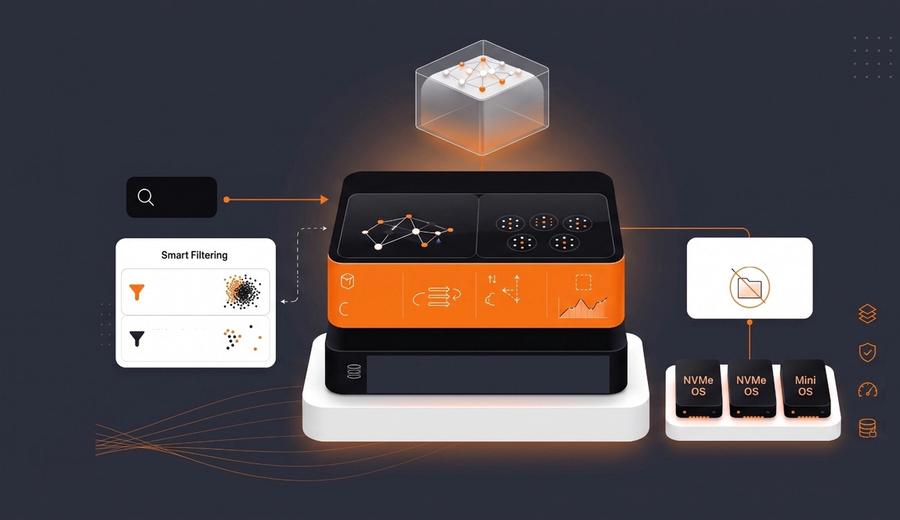
Retrieval-augmented generation (RAG), recommendation engines, image matchers, and semantic search all use a vector database to identify similarity...